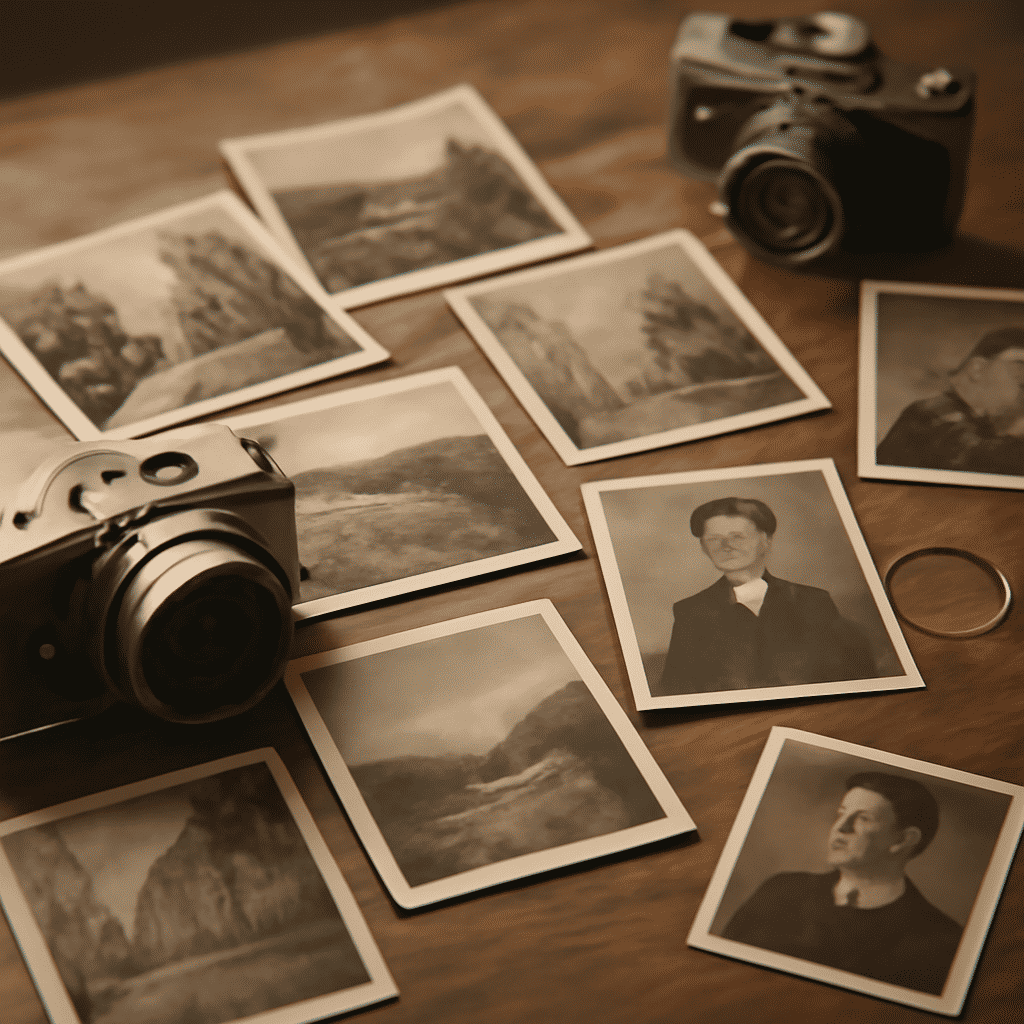
Photography holds a storied place in the chronicles of human creativity, capturing not just images but moments in time, encapsulating emotions, eras, and evolving narratives. From its inception, photography has offered a lens through which we can glimpse the breadth of human experience, driven by the vision of trailblazing photographers whose innovative styles reshaped the medium.
The origins of this art can be traced back to the early 19th century, with the development of the first practical processes. The daguerreotype, named after its inventor, Louis Daguerre, marked a revolutionary point. This early method, producing highly detailed images on silvered plates, allowed for personal and public documentation like never before. Daguerre's work inspired others to refine and push the boundaries of what was possible.
As technology evolved, so too did artistic expression. In the latter half of the 19th century, Julia Margaret Cameron revolutionized portraiture. Her soft-focus technique, often using a deliberate blur, added an ethereal quality to her subjects, many of whom were luminaries in the arts and sciences. Cameron’s emotive style set the stage for future portrait photographers, who sought to capture not just the likeness but the essence of their subjects.
The early 20th century heralded a new era. Photographers like Alfred Stieglitz, who championed photography as a legitimate art form, wielded their instruments to convey deeper philosophical ideas. Stieglitz’s work, particularly in his series “Equivalents,” sought to transcend literal representation, introducing abstraction and subjective interpretation into what had been a predominantly objective medium.
Henri Cartier-Bresson, often considered a pioneer of modern photojournalism, introduced the concept of the "decisive moment," capturing fleeting instances that tell stories of profound depth and meaning. His approach emphasized the importance of timing, composition, and intuition, principles that continue to inform documentary and street photography today.
The post-war period saw figures like Robert Frank and Diane Arbus challenging conventional narratives. Frank’s seminal book “The Americans” presented a raw, unvarnished portrait of mid-20th century United States, its themes resonant with both critique and curiosity. Arbus, with her stark, unflinching portraits, gave a voice to the marginalized and the misunderstood, pushing back against societal norms.
Advancements in technology continually reshape the possibilities within the medium. The development of color processes transformed the visual language, allowing for new types of emotional and thematic exploration. Photographers like William Eggleston used color not just for aesthetic appeal but as an integral component of storytelling, capturing the mundane beauty of everyday life in vivid detail.
As digital methods emerged, figures like Cindy Sherman and Andreas Gursky expanded the boundaries of concept and scale. Sherman’s explorations in identity and persona through staged self-portraits challenge viewers to reconsider notions of truth and fiction. Gursky’s large-scale works, often digitally manipulated, present a hyper-real synthesis that blurs the line between reality and abstraction.
Today, photography continues to evolve. The digital age offers unprecedented access and democratization, empowering a global array of voices. Contemporary photographers harness new tools, from instant sharing platforms to advanced editing software, to craft narratives that reflect diverse perspectives and experiences.
Through the lens of history, photography reveals itself as a dynamic interplay of art and technology, continually reshaped by bold visionaries. It remains a powerful medium, connecting us across time and space, inviting humanity to see itself anew with each shutter click.